Capture current operations, ancillary activity, future channels and approval dependencies.
USE · EXCLUSIVITY · CO-TENANCY · ALTERNATIVE RENT · GO-DARK
A closed anchor is a fact. The lease decides what follows.
Bring the permitted use, protected category, centre occupancy, named retailers, competing-use observations, cure assumptions and rent scenarios together—then keep the economic answer separate from the legal decision.
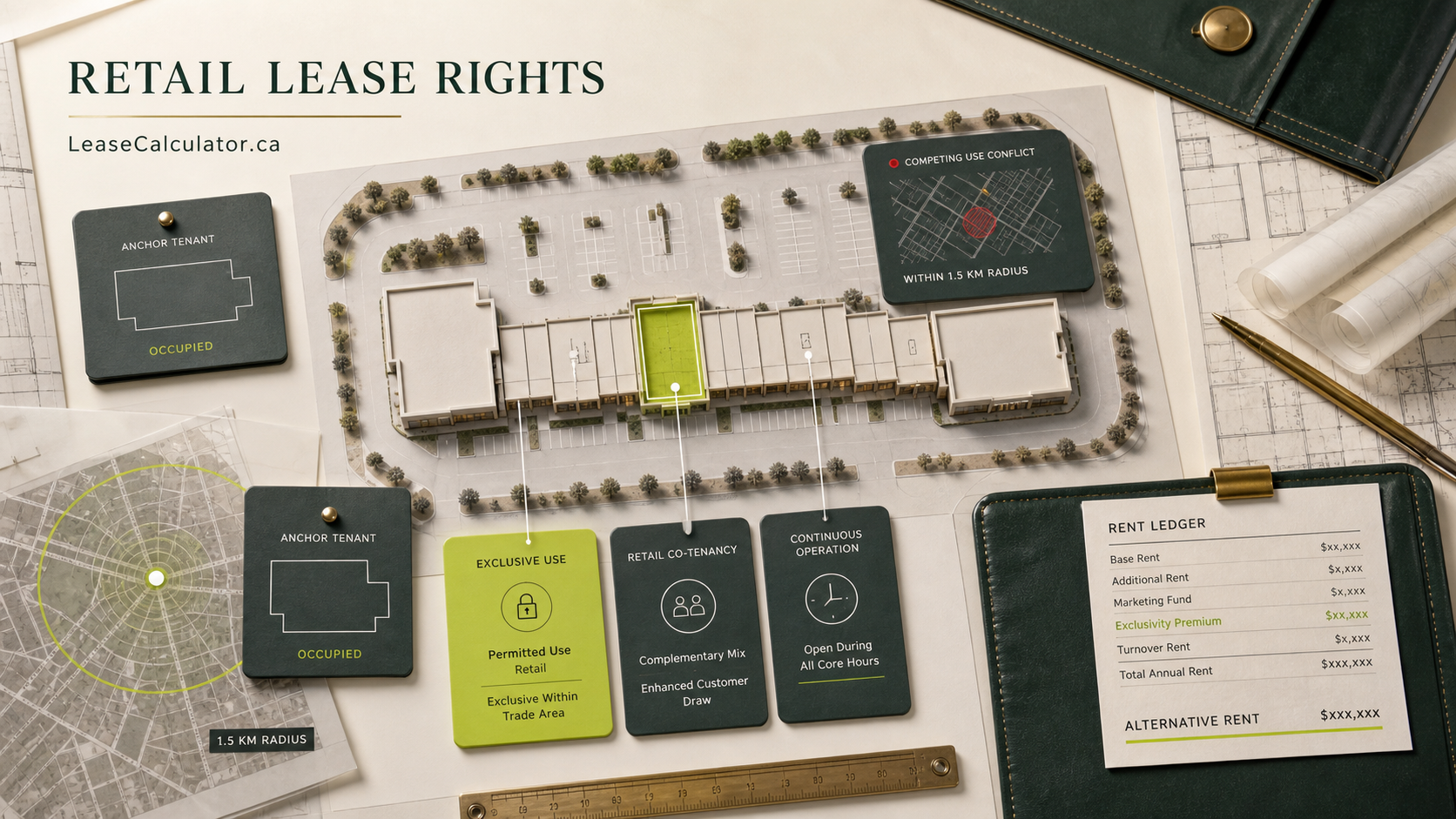
Keep scope, territory, thresholds, carve-outs and competition review visible.
Separate named retailers, occupied area, measurement period, cure and evidence.
Model alternative rent, continuing components, closure impact and timing without inventing rights.
DEVICE-LOCAL RETAIL RIGHTS WORKSPACE
Put the lease wording, property facts and money on one decision path.
Start with an illustrative file or your own terms. Nothing here decides that a clause was triggered; it shows what the entered scenario would mean and what still needs proof.
Identify the exact lease, property and review date.
This is the control layer. A centre directory, memory or proposal summary is not a substitute for the operative lease and amendment chain.
Connect retail lease rights to transaction strategy and qualified review
- Commercial advisory at Commercially.ca
The advisory practice behind this tool, covering occupier and owner lease strategy.
- Work with a Calgary commercial advisor
When a local Calgary advisor is the logical next step on a live requirement.
- Research industrial space on IndustrialLeasing.ca
Warehouse, flex and distribution space research for Canadian industrial requirements.